

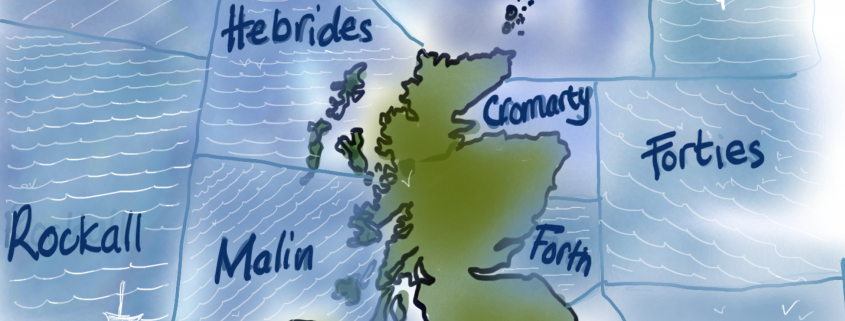
The Shipping Forecast
The shipping forecast has evolved. It is something other than the weather/shipping information the Met Office produces and the BBC broadcasts.
It has become an iconic, steadfast cornerstone to the Isles of Britain’s coastal dwellers. Adopted by poets and written about in rosy tones, it is romanticised by those who do not need the information but, hear the beauty in the listed areas.
It provides safe harbour to those who snuggle in the depths of their duvets; imaginations full of salty spray and white horses.
“The Shipping Forecast”,
Seamus Heaney
Dogger, Rockall, Malin, Irish Sea:
Green, swift upsurges, North Atlantic flux
Conjured by that strong gale-warming voice,
Collapse into a sibilant penumbra
In an age where it is too convenient to get the latest weather, the Shipping Forecast is still broadcast four times a day. Long may that continue for both the fisherman and the duvet dwellers of this land.
• 0048 – transmitted on FM and LW.
• 0520 – transmitted on FM and LW.
• 1201 – normally transmitted on LW only.
1754 – transmitted only on LW on weekdays, but at weekends transmitted on both FM and LW.
The daily 0048 forecast is available online via BBC iPlayer.
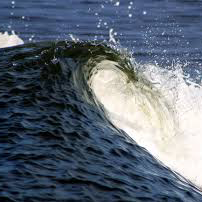
The Science of a Breaking Wave.
Living by the sea and obviously loving it as much as I do, leads as much to questions being asked as well and canvases being filled.
As ‘Finn the Dog’ and I share a walk along the beach, the seagulls dancing in the wind, my scarf wrapped up as warmly as possible and the waves crashing on the stones; I can’t help but admire the crashing waves.
No doubt you’ll remember from your school days, the science of how a wave breaks. How as the wave races towards to shore into shallower and shallower waters, the seabed acts as a brake slowing the bottom of the wave. At a certain point, the top of the wave is going faster than the bottom and the wave starts to break. If you’re in a kayak or on a board this is when the fun starts. If you are walking the dog along the beach, then this is when you marvel at the surf and maybe remember the geeky fact that a wave will start to break when it reaches a water depth of 1.3 times the wave height. Wishing you breaking waves on your next beach walk.
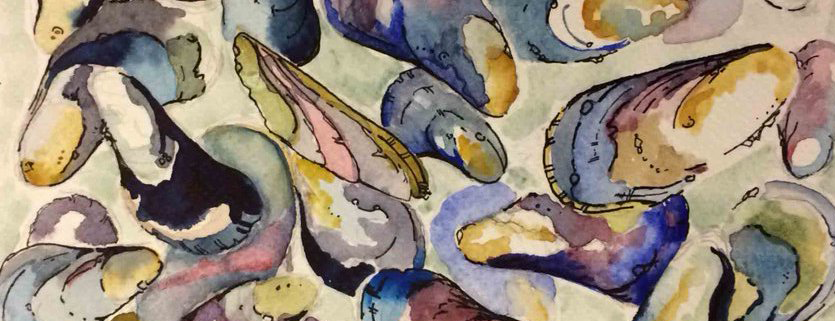
If you are looking for a simple meal that sums up everything which is good about
being by the coast then you can’t go far wrong with a bowl of mussels. Simple, cheap
and tasty. Depending on where you are you can either gather them yourself or nip
down to the local supermarket.
If you do gather them yourself, there are a few guidelines you should adhere to. Make sure the beach you are gathering on is clean. Mussels are filter feeders, so clean water only.
Gather the big but not massive Mussels. (The larger mussels have had a chance to breed but the huge ones are older and not as tasty.)
Only collect when there is an ‘r’ in the month, so not May, June, July or August and by collecting only in the cooler months there is less likely to be harmful bacteria in the water.
Choose the mussels growing further up the rock rather than those down by the sand. They will be less gritty.
So, after a pleasant walk along the beach gathering mussels, you can either cook them on the beach or bring them home. Either way you’ll want to clean off any barnacles and remove the ‘beards’ (like hairy seaweed) coming from the shell. Give them a rinse. Throw away any mussels which haven’t closed. (After cooking you’ll throw away any which haven’t opened.)
Mussels!
A bag of live mussels
A glass of dry white wine
4large shallots, finely chopped
4garlic cloves, finely chopped
Pinch of salt
Some chopped flat-leaf parsley or basil
A knob of butter, cut into pieces
Rinse and scrub mussels under cold water.
Using your fingers or paring knife, remove beards (strings that hang from the mussel shells), and discard.
In a large stockpot set over medium heat, combine wine, shallots, garlic, and salt.
Simmer 5 minutes.
Add mussels, cover, and increase heat to high.
Cook until all mussels are open, about 5 minutes. (Discard any which have not
opened.)
Stir in herbs and butter.
Remove from heat.
Divide mussels and broth among four bowls
Serve immediately with crusty bread and butter!
Wishing you happing gathering days and mealtimes. Here is a couple of links which you may find helpful:
http://www.edenproject.com/learn/for-everyone/collect-mussels-and-cook-your-own-moules-marinières
http://www.gallowaywildfoods.com/seasonal-notes/april-mussels/
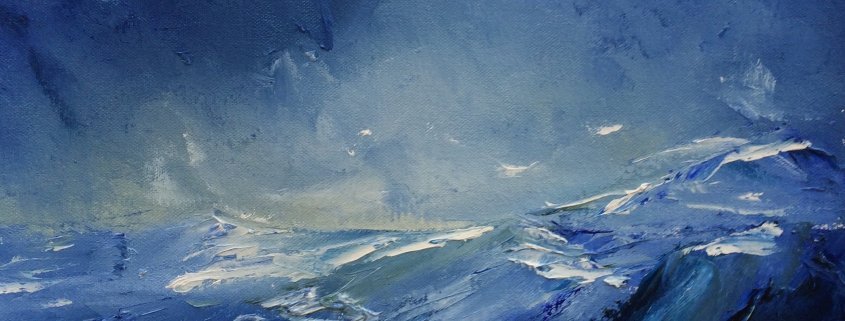
The sea shimmers in the morning, catching little puddles of silver. They’re the scalloped edges of an invitation. If you’re lucky, you’ll find yourself afloat, discovering the freedom of a cool breeze, the sound of wavelets running alongside your boat and hope of never being too far away from the sea again.
That love of the sea happened for me as a child, and it never left. Whether kite flying on a beach or sailing with your eyes cast windward or feeling the rhythm of a paddle as a seakayak moves through the water. All these experiences are deeply held treasures.
A few days ago I took a friend who was a little nervous of boats out in a canoe. We chatted about nothing in particular while the sea sang it’s song. My friend got a little braver and paddled a lttle further out. We found ourselves next to my mooring, got out the canoe and went sailing in the evening sun. The sea has another convert.
This weather has brought new boating experiences to lots of people. If you have never ‘had a go’, this could be the summer where you discover the water. I’ve put a few links at the bottom of this blog. Book a course and get out on a boat. Life really will never be the same again.
http://canoescotland.org/courses-training/find-course-or-centre
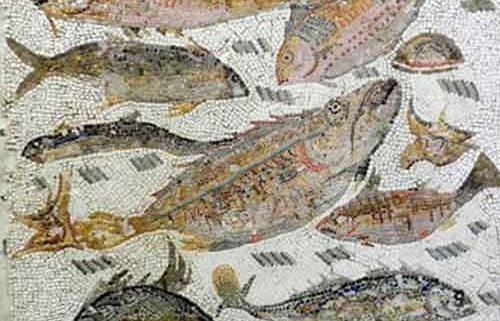
From the Middle Ages onwards, herring—one of the most used marine resources—has provided Scotland with a precious, cheap, plentiful and nutritious source of food. Fishing was first a subsistence activity, and it then developed into an industry. Once in unbelievable abundance—the Old German word ‘herring’ means ‘multitude’—herring attracted thousands of boats from all over Europe to the Scottish waters, and at the peak of the herring boom, Britain exported a quarter of a million tonnes a year.
Political and religious institutions, the Crown and Government supported and encouraged the economic sector through exclusive rights, licences and bounties. Yet, severe competition and intensive methods of fishing endangered the species.
Silver-coloured, as slick and bright as mercury, the fish has poetically been nicknamed ‘silver darlings’. This has become the title chosen by Neil Gunn for one of his novels (1941), by Peter Arnott’s for its dramatic adaptation and for Clarence Elder’s film (1947). The decrease of the natural food source magnified its legendary dimension through folklore, songs and tales. The National Museum of Scotland exhibited a piece called The Last of the Silver Darlings by glassmaker and storyteller James Maskrey (2014).
This paper focuses on the importance of silver darlings in Scottish History, and on their aesthetic and emblematic use.
https://en.wikipedia.org/wiki/Fishing_industry_in_Scotland
